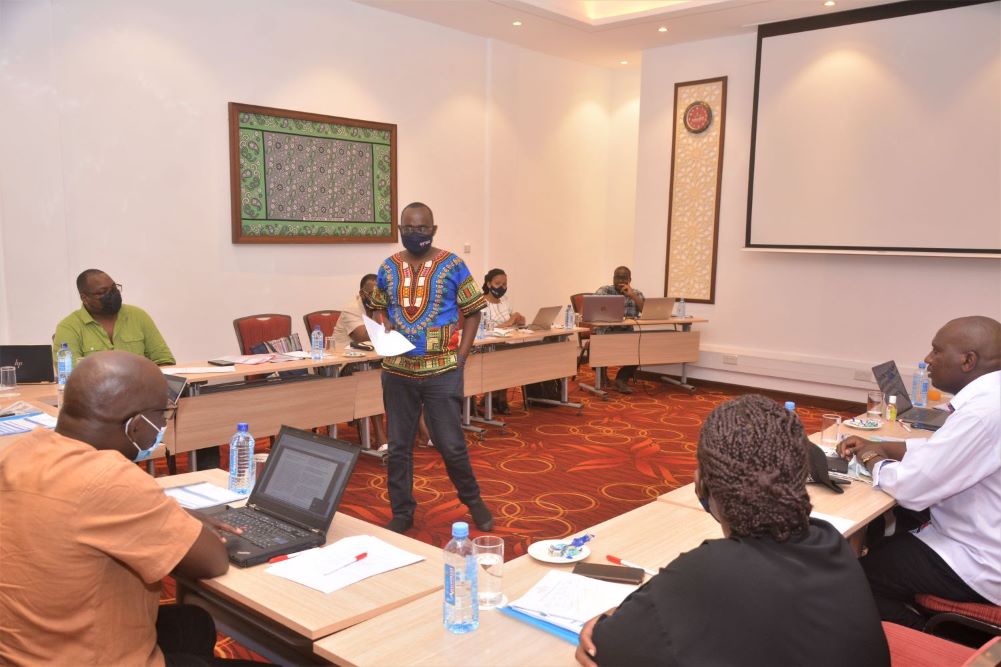
The Media Complaints Commission (MCC) is reviewing the draft Media Complaints Commission Rules of Procedure for effectual service delivery.
The new regulations will simplify and accelerate the complaints process, while ensuring that technicalities that arise out of arbitration processes are eliminated.
MCC Chairperson Mr William Oketch has said the new move has been occasioned by the expiration of the previous guidelines and the need to embrace emerging trends in media arbitration.
In addition to the proposed amendments to the Rules of Procedure, the Media Complaints Commissioners will also undergo a training on writing rulings to ensure consistency. The training will be conducted by the Judiciary Training Institute in the first quarter of the 2021/22 financial year.
“We have embarked on a process that is critical to our work. The new Rules of Procedure will be elaborate on the mediation procedure, and this will greatly assist the Commission in executing its mandate”, said Mr Oketch.
The Commission recently held a planning retreat where it reviewed the Rules of Procedure, its workplan and budget for the financial year. It also engaged former Commissioners to share their experiences as well as to develop an awareness campaign.
MCK CEO Mr David Omwoyo affirmed the Council’s support to the Commission to enable it deliver on its mandate.
“We will ensure that the secretariat is adequately staffed to assist in the running of the Commission’s work. The Council will also support the Commission in undertaking a countrywide sensitisation roadshow on the work of the Media Complaints Commission. The aim is to educate our stakeholders and the public on complaints lodging and adjudication mechanisms”, he said.
Two commissioners who had previously served at the Commission, Honourable Priscilla Nyokabi and Prof Murej Mak’Ochieng, shared some experiences of their time at the Commission.
Honourable Nyokabi likened MCK’s story to the Kenyan Constitution, given their foundation on ethical issues, professionalism and restitution. She called for countrywide awareness campaigns, including conducting sittings in various counties especially those with a high violation of the Code of Conduct.
Prof Murej emphasised the need to balance regulation and media as a business, adding that the Commission was key in streamlining the business aspect of media as a public good.
Pursuant to section 31 of the Media Council Act, 2013 the Media Complaints Commission adjudicates in disputes between the government and the media and between the public and the media and intra media on ethical issues and ensures the adherence of high standards of journalism as provided for in the Code of Conduct for the Practice of Journalism in Kenya.